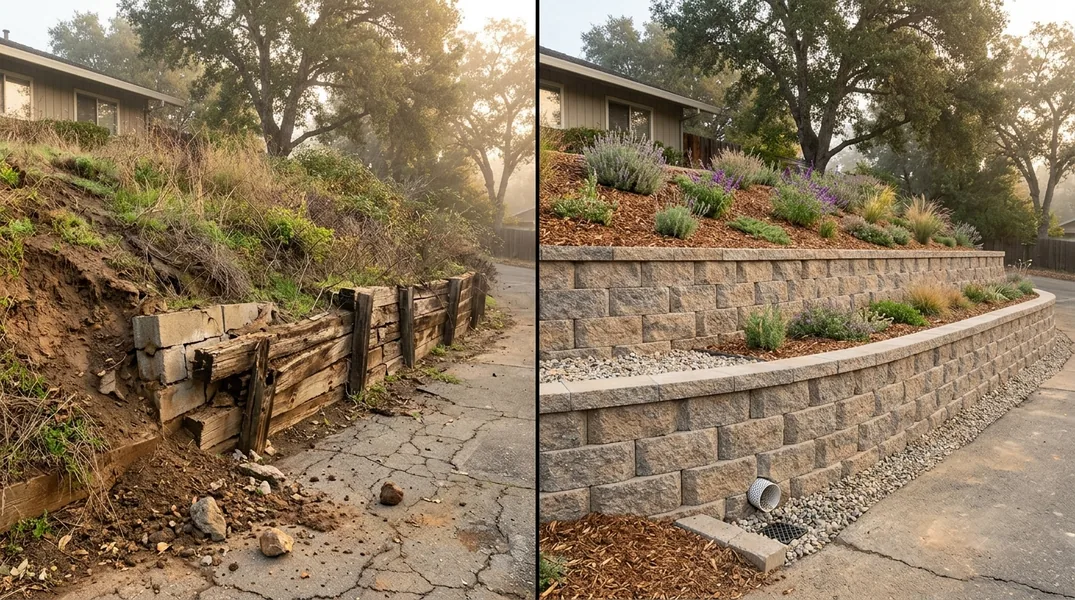
Why Sacramento's Winter Rains Are Tough on Retaining Walls
Sacramento's winter storm season can dump several inches of rain in a matter of days, and that water has to go somewhere. When it saturates the soil behind a retaining wall, it creates a force called hydrostatic pressure. Think of it like a balloon filling with water against the back of your wall. The wall was designed to hold back soil, not a lake, and that added pressure can quickly push it past its limits. Homeowners in Sacramento often notice the first signs of trouble after a heavy storm: bulging, leaning, or cracks that seem to appear overnight.
The problem is compounded by the region's clay-heavy soils, which drain slowly and hold moisture long after the rain stops. That means the pressure doesn't just spike during the storm; it lingers for days or weeks, slowly weakening the wall's structure. Without a proper retaining wall drainage system, even a well-built wall can fail within a few seasons. Understanding how water behaves in your specific soil is the first step toward protecting your investment.
How Hydrostatic Pressure Quietly Destroys a Wall
Hydrostatic pressure retaining wall failures are one of the most common issues we see in the field, and they almost always start invisibly. Water accumulates in the backfill soil because there is nowhere for it to escape. As the soil becomes saturated, it gains weight and exerts outward force against the wall. Over time, this pressure can cause the wall to tilt, crack, or even collapse. What makes it dangerous is that the damage often happens below the surface, so by the time you see a lean or a crack, the problem has been developing for months.
Another culprit is poor compaction during installation. If the soil behind the wall wasn't properly compacted, it settles unevenly when wet, creating voids and channels that concentrate water in specific areas. This leads to localized pressure points that can blow out sections of the wall. In many cases, homeowners call us for Retaining Wall Repair thinking the wall itself was defective, when the real issue was water management from day one. Addressing the drainage is just as important as repairing the structural damage.
The Role of a Retaining Wall French Drain
A retaining wall french drain is the workhorse of any effective drainage system. It typically consists of a perforated pipe wrapped in filter fabric and surrounded by gravel, installed at the base of the wall behind the backfill. When water enters the soil, it flows through the gravel into the pipe and is redirected away from the wall to a safe discharge point, such as a storm drain or a lower area of the yard. Without this pathway, water has no choice but to push against the wall.
Equally important is the gravel backfill and filter fabric layer directly behind the wall. This zone allows water to move freely down to the drain while preventing fine soil particles from clogging the system. Weep holes are another critical component, giving water a secondary exit point through the wall face. When we handle Retaining Wall Installation in the area, we design the drainage system based on the slope, soil type, and expected water volume, not a one-size-fits-all template. A properly sized and installed french drain can add decades to the life of your wall.
Signs Your Wall's Drainage Is Failing (and What to Do)
Homeowners should watch for several warning signs as the rainy season progresses. Water pooling at the base of the wall, soil washing out from between blocks, white mineral stains (efflorescence) on the wall face, or a noticeable lean are all red flags. You might also see sinkholes or soft spots in the yard behind the wall, which indicate that soil is being eroded from underneath. Cracks that widen after storms are particularly concerning because they suggest the wall is actively moving.
If you spot any of these issues, don't wait for the next storm to make it worse. In some cases, a targeted repair and drainage retrofit can save the existing wall. In more severe situations, Retaining Wall Replacement may be the safer and more cost-effective long-term solution, especially if the original wall lacked proper drainage from the start. We always recommend a professional inspection before the rainy season begins, so problems can be caught while they are still minor. If you are unsure whether your wall is at risk, reach out for a free estimate and we can assess the drainage and structure.
Retaining Wall Drainage Near Me: Choosing the Right Materials
Not all retaining wall materials handle water the same way. Concrete Retaining Walls are highly durable and can be engineered with integrated drainage features, but they still require a proper french drain behind them. Segmental block walls rely on gravel backfill and weep holes, and wood walls are the most vulnerable to rot and water damage. The right choice depends on your site's slope, soil, and how much water you expect to manage during storm season.
We also consider the discharge point for the drain. It's not enough to collect water; it has to be directed to a location where it won't create a new problem, such as a neighbor's yard or a foundation. In many Folsom and Elk Grove properties, we tie the drain into existing landscape drainage or a dry well. If you are searching for retaining wall drainage help near me, look for a contractor who treats drainage as a core part of the build, not an afterthought. The difference shows up years later when the storms hit.
Protecting Your Wall Before the Next Storm
The best time to address drainage is before the first major storm of the season. A professional inspection can identify clogged drains, settled backfill, or early signs of pressure that aren't visible to the untrained eye. Simple maintenance, like clearing debris from weep holes and checking that downspouts are directed away from the wall, can make a meaningful difference. For older walls, adding or upgrading a french drain is often the single most effective way to extend their lifespan.
Sacramento Retaining Wall serves homeowners throughout the Roseville and greater Sacramento area with drainage-focused installation and repair. We understand how local soils and storm patterns affect retaining walls, and we build systems designed to handle them. Don't wait for a wall to fail before taking action. Call (916) 891-1319 to schedule an assessment, or visit our website to learn more about our pricing and services. A dry, stable wall is a safe wall, and a little prevention now can save you thousands later.
Looking for a professional retaining wall contractor in Sacramento? Sacramento Retaining Wall responds fast for all your retaining wall needs.
Get a Free QuoteOur services: Retaining Wall Installation · Retaining Wall Repair · Retaining Wall Replacement