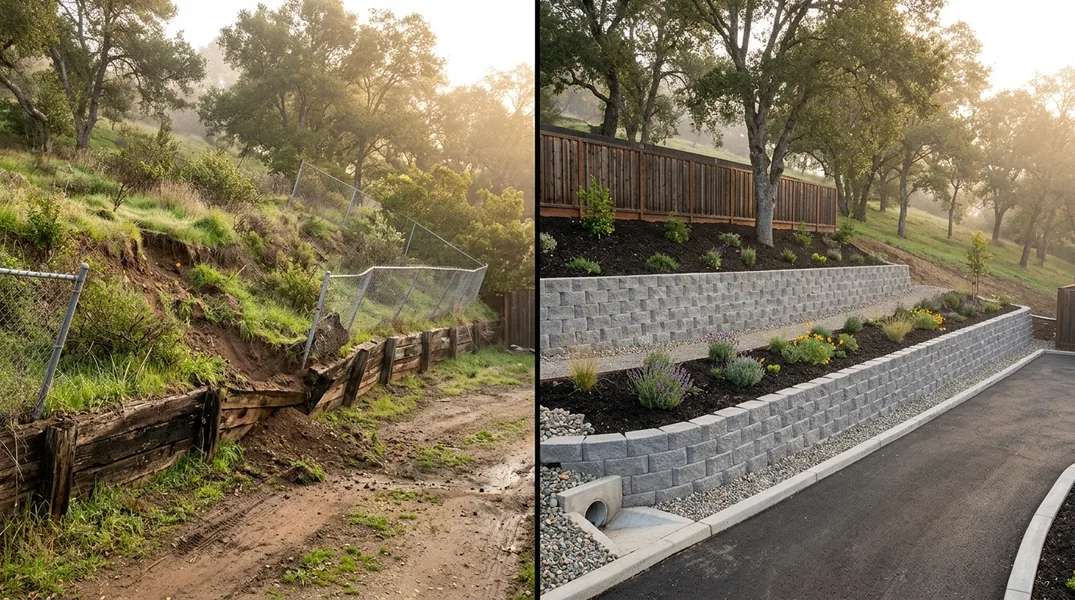
Why Retaining Walls Lean and What It Means for Your Property
A leaning retaining wall is more than an eyesore. In Sacramento, the combination of expansive clay soils, seasonal rain, and irrigation habits puts constant pressure on these structures. When a wall starts to tilt, it usually means the soil behind it is pushing harder than the wall was designed to resist. That pressure can come from poor drainage, root intrusion, or simply age. Ignoring the lean allows the problem to accelerate, and what starts as a cosmetic issue can become a safety hazard for your family, pets, and neighbors.
The first step is understanding what the lean is telling you. A slight tilt of an inch or two over several years may be manageable with targeted repairs. A sudden shift after heavy rain, or a lean that exceeds a few inches, often signals deeper failure. Homeowners in neighborhoods like Land Park, East Sacramento, and Natomas should pay close attention because the region's soil conditions are unforgiving to poorly drained walls. Catching the problem early is the difference between a modest fix and a full rebuild.
Signs You Need Leaning Retaining Wall Repair (and When It Is Too Late)
Not every lean requires a new wall. If the movement is minor and the wall itself is structurally sound, professional Retaining Wall Repair can often stabilize the structure. Look for cracks that are hairline rather than wide, a lean that has not progressed rapidly, and a wall that still holds back soil without bulging. In these cases, repairing drainage, resetting a few courses, or reinforcing the base can extend the wall's life for years. The key is addressing the cause, not just the symptom. A wall that leans because water cannot escape will lean again unless the drainage is corrected.
On the other hand, some warning signs point toward replacement. If you see large diagonal cracks, blocks that have shifted out of alignment, soil spilling through gaps, or a wall that is visibly bowing, the structure may be beyond reliable repair. Walls taller than four feet, walls supporting a driveway or structure, and walls with compromised footings are also candidates for replacement. When a wall fails, it can release tons of soil and debris, so safety should always come first. If you are unsure which category your wall falls into, a professional assessment is the safest path forward.
Retaining Wall Crack Repair: What a Professional Evaluation Looks Like
Cracks are the most common complaint we hear from homeowners, and they are also the most misunderstood. A crack in a concrete or block wall can be caused by settlement, soil pressure, tree roots, or freeze-thaw cycles. Effective retaining wall crack repair starts with diagnosing the source. A professional will examine the wall's face, the soil behind it, the drainage system, and the footing. They may probe the soil or check for water pooling. The goal is to determine whether the crack is cosmetic or structural. Filling a structural crack without fixing the underlying pressure is a temporary patch at best.
For minor cracks, repair might involve cleaning and sealing the crack, improving drainage, and monitoring the wall over time. For more serious cracks, the fix could include installing additional drainage, reinforcing the wall, or rebuilding a section. Homeowners in Folsom and Roseville often deal with cracks caused by expansive soils that swell and shrink with the seasons. In those areas, a repair plan that accounts for soil movement is essential. The right approach depends on the wall material, height, and the specific cause of the cracking.
Retaining Wall Replacement Near Me: When a New Wall Is the Smarter Investment
Sometimes replacement is the most cost-effective choice. If a wall is severely leaning, has multiple wide cracks, or has already been repaired once and failed again, putting more money into repairs can be throwing good money after bad. A new wall designed with proper drainage, adequate footing, and the right materials will outperform a patched-up older wall. Modern Concrete Retaining Walls are engineered to handle the soil pressures common in the Sacramento Valley, and they can be built to match your landscape design. Replacement also gives you the chance to correct grading and drainage issues that may have caused the original failure.
If you are searching for retaining wall replacement near me, look for a contractor who evaluates the site, explains the cause of the failure, and provides a clear plan. A proper replacement includes excavating the old wall, inspecting and improving the base, installing drainage aggregate and weep holes, and compacting soil in lifts. Skipping any of these steps leads to the same problems down the road. In Elk Grove and other growing areas, new walls should also account for future landscaping and irrigation changes. A well-built wall should last decades, not years.
Retaining Wall Replacement Cost in Sacramento: What to Budget
Homeowners often ask whether repair or replacement is cheaper. The honest answer is that it depends on the extent of the damage. Minor repairs might cost a few hundred to a few thousand dollars, while a full replacement can range from several thousand to well over ten thousand dollars depending on height, length, material, and access. For accurate pricing, you need an on-site evaluation. Factors that affect cost include wall height, soil conditions, the need for permits, and whether the old wall must be demolished and hauled away. A wall that is easy to access costs less to replace than one tucked behind a pool or in a tight side yard.
It is also important to budget for drainage improvements, since poor drainage is a leading cause of failure. A replacement that includes proper drainage may cost slightly more upfront but will save money over time. Homeowners should be wary of quotes that seem unusually low, as they often exclude drainage, compaction, or disposal. A detailed written estimate should break down labor, materials, drainage, and cleanup. Financing options may be available, and some projects can be phased if the wall is long. The best way to get a realistic number is to schedule an inspection and ask questions about every line item.
Repair or Replace? How to Decide and Who to Call
So, should you repair or replace? The decision comes down to three factors: the severity of the movement, the cause of the problem, and the age and material of the wall. If the wall is young, the lean is minor, and the cause is fixable (such as clogged drainage), repair is often the right call. If the wall is old, the lean is significant, or the structure has already been repaired, replacement is usually more reliable. Safety should always be the priority. A leaning wall that could collapse should be assessed immediately, and in some cases, temporary shoring may be needed until a permanent solution is in place.
For homeowners in Sacramento, the best next step is a professional evaluation. Sacramento Retaining Wall offers inspections and clear recommendations for repair or replacement. You can call (916) 891-1319 to discuss your wall or request a free estimate. Whether you need a small crack repair or a full Retaining Wall Replacement, addressing the problem early protects your property and your peace of mind. Do not wait for the next rainy season to make a decision.
Looking for a professional retaining wall contractor in Sacramento? Sacramento Retaining Wall responds fast for all your retaining wall needs.
Get a Free QuoteOur services: Retaining Wall Installation · Retaining Wall Repair · Retaining Wall Replacement